


Gochujang roasted vegetables are simple to make and SO flavorful from the creamy gochujang salad dressing that you slather them with before serving!

Table of Contents
Don't you just love a veggie roast? It's one of my go-tos when I want an easy side dish or even a whole meal. Today, we are mixing up the usual roasted veggies to make gochujang vegetables!
If you're new to gochujang, it's a fermented, sweet-and-spicy Korean hot sauce. It's got a mild kick, and the fermented flavor adds so much incredible umami! I love using it to make dishes like gochujang spaghetti or to add sweet heat to kimchi fried rice, and it's such a delicious addition to roasted vegetables, too.

For this recipe, we are keeping the roasted veggies pretty simple, just tossing them in some soy sauce, gochujang, lime juice, sesame oil, and spices. They are the perfect vehicle for the creamy, spicy-sweet gochujang tahini sauce that you'll use to finish them!
And the best part is that you make the gochujang sauce in the blender while the veggies roast to save some time in the kitchen.
Roasted vegetables are very versatile, so feel free to use the veggies I have listed, or use what you have! Potatoes, diced or sliced winter squash, cauliflower, summer squash, etc all work well in this recipe.

✓ Ingredients and substitutions
- veggies - You can really mix and match the veggies to use what you have! I'd suggest keeping the garlic and onion, because they also add some great flavor, but other than that, go to town! For my gochujang vegetables, I'm using garlic, sweet potato, baby carrots, broccoli, and onion.
- spices - For the dried spices, you will need garlic powder, onion powder, and chili powder.
- sauces - We are tossing the veggies in a mixture of low-sodium soy sauce, gochujang, and toasted sesame oil. For oil-free, you can use an extra tablespoon of soy sauce instead of the oil.
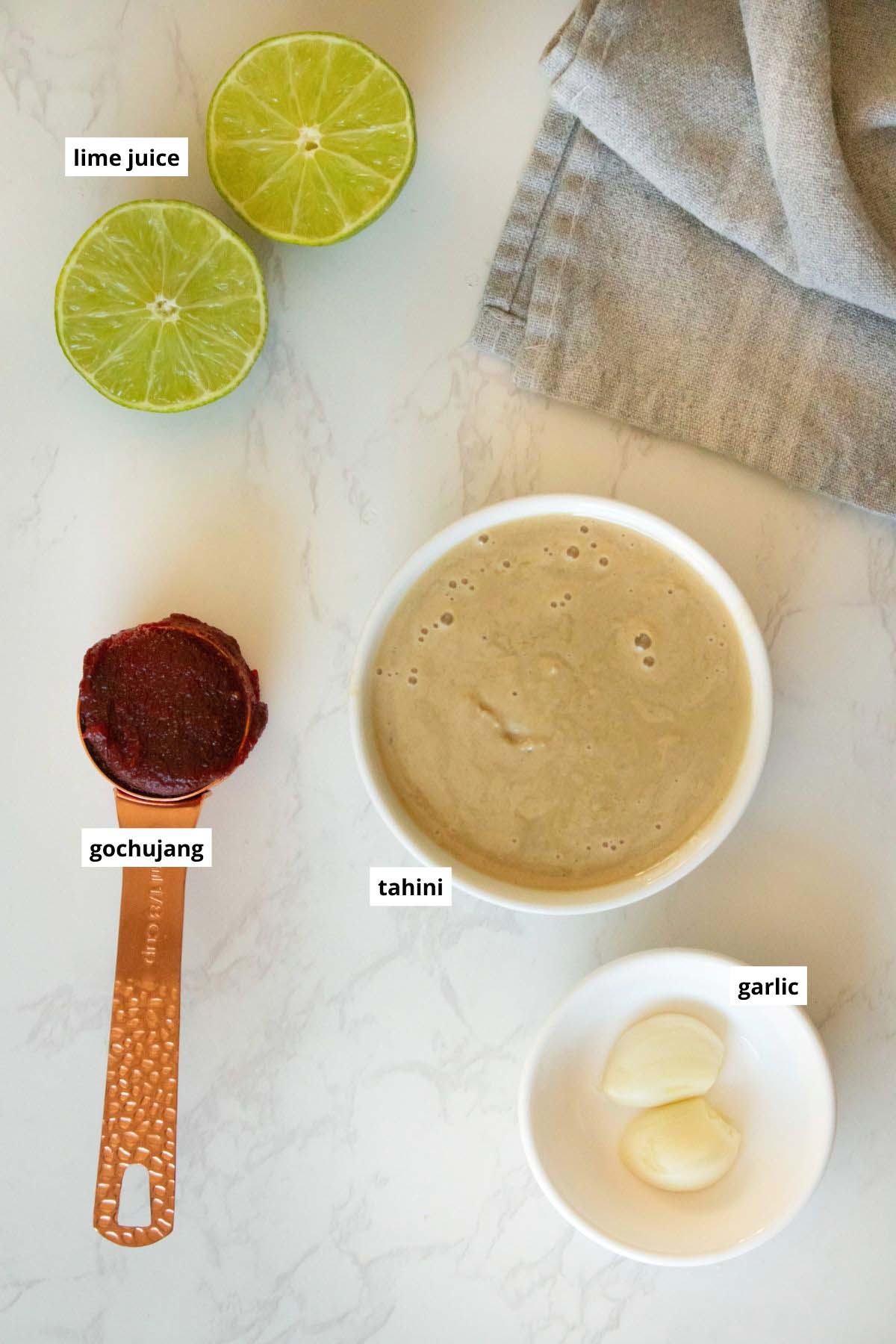
- tahini - This is the base for your dressing. Be sure to stir your tahini well! If you just use the tahini from the top of the jar without stirring, your dressing will be too thin.
- gochujang - Adds sweet heat to the dressing.
- lime juice - For the vegetable marinade and to add tang to the dressing. You can use rice wine vinegar instead, if you don't have a lime. Start with 1 tablespoon of the vinegar, and taste to see if you want more.
- agave nectar - For the vegetable marinade. If your tahini is bitter, you may need to add a tablespoon or so of agave or maple syrup to balance out that flavor.
- garlic - Adds umami and zestiness to the dressing.
- water - To thin things out, so you can blend the dressing. How much you will need will depend on your preference, how thick or thin your tahini is, and your blender.
🔪 How to make gochujang vegetables
Preheat the oven to 400° F and grease a 9x12" baking pan.

Add the garlic, sweet potato, carrots, broccoli, and onion to the pan. Sprinkle on the garlic powder, onion powder, chili powder, and salt. Toss to coat

In a small bowl, combine the soy sauce, gochujang, agave, lime juice, and oil, whisking to combine.

Drizzle this all over the veggies, and toss again to coat well. Bake for 45 to 60 minutes, stirring every 15 minutes, so the veggies roast evenly.

Meanwhile, combine all of the gochujang dressing ingredients in your blender. Blend until you have a nice, smooth dressing. Add more water by the teaspoon, as needed, to reach your desired consistency. Add agave to taste, if needed.
When the veggies are cooked to preference, remove the pan from the oven.

Dish them onto your plates, and drizzle on a generous portion of the dressing. Serve hot.
💡 Helpful tips
- Make sure that you are using low-sodium soy sauce. Regular soy sauce has a stronger flavor that will overpower the other seasonings in the recipe.
- Instead of seasoning the veggies in a bowl, just toss them with the soy sauce and spices right in your baking pan.
- Mixing the gochujang, soy sauce, and oil together is key. This thins out the sauce, so you can easily drizzle it all over the veggies.
- For oil-free, just replace the oil with additional soy sauce. The oil helps the veggies brown in the oven, so just know that they might not caramelize like they would with oil added.
- Be sure to stir your tahini well! If you just use the tahini from the top of the jar without stirring, your dressing will be too thin.
🫙 Storage directions
Store leftover veggies for three to four days in the fridge.
Any leftover gochujang dressing will keep separately for up to a week in the fridge, so you can make the dressing ahead of time, if you like. The dressing will thicken as it chills, so if you do make it ahead of time, pull it out of the fridge when you start cooking, so it can come to room temperature.


📖 Recipe

🌶️ Gochujang Roasted Vegetables
Ingredients
For the Gochujang Vegetables
- 8 cloves garlic
- 1 sweet potato cut into ½" pieces (peeled or not is fine)
- 1 cup baby carrots
- 1 head broccoli cut into 1" florets
- 1 cup chopped onion
- 1 teaspoon garlic powder
- 1 teaspoon onion powder
- 1 teaspoon chili powder
- ½ teaspoon salt
- 1 tablespoon low-sodium soy sauce
- 2 tablespoons gochujang
- 1 tablespoon toasted sesame oil or more low-sodium soy sauce for oil-free
- 1 tablespoon agave or maple syrup
- 1 teaspoon lime juice
For the Dressing
- ½ cup tahini
- 2 tablespoons gochujang
- 2 small cloves garlic or 1 large clove, or 1-2 teaspoons garlic powder
- ⅓ to ½ cup water or more, as needed to reach your desired consistency
- 2 tablespoons lime juice
- agave nectar or maple syrup, optional, to taste

Instructions
Make the gochujang veggies.
- Preheat the oven to 400° F and grease a 9x12" baking pan.
- Add the garlic, sweet potato, carrots, broccoli, and onion to the pan. Sprinkle on the garlic powder, onion powder, chili powder, and salt, and toss to coat the veggies well.
- In a small bowl, combine the soy sauce, gochujang, agave, lime juice, and oil, whisking to combine. Drizzle this all over the veggies, and toss again to coat well. Bake for 45 to 60 minutes, stirring every 15 minutes, so the veggies roast evenly. They are ready when they're a little browned on the edges and the carrots and sweet potato are fork-tender.
Meanwhile, make the dressing.
- Combine all of the ingredients in your blender, and blend until you have a nice, smooth dressing. Add more water by the teaspoon, as needed, to reach your desired consistency.
- Some tahini can have a more bitter flavor that comes through in the dressing. If your dressing tastes bitter, add a tablespoon or so of agave to balance it out. Blend and taste again.
Assemble the veggies.
- When the veggies are cooked to preference, remove the pan from the oven. Dish them onto your plates, and drizzle on a generous portion of the dressing. Serve hot.



Got a question? Tried this recipe? Leave a reply!